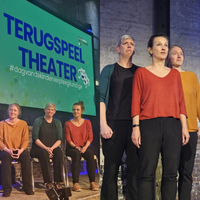
FORMS OF THEATER
You see a striking scene.
You recognize yourself in it immediately.
You burst out laughing or get a bit startled. Or both.
And then we discuss it.
The audience has ideas, knowledge, and experience to offer.
After all, it concerns their daily practice.
We replay the scene, better!
And that is how you learn with and from each other.
THEATRE OF CUES

In directorial theatre, we work with complex or opaque themes. Something is going on within the organization that we need to discuss together. It is new or simply complicated. It could be better. Easier. What are we missing? What is already there?
Try it again!
The audience gives cues and the actors replay the scene. The situation changes. Sometimes it gets better. Sometimes worse. That is how we learn where the friction lies and what works!
Learning from each other
The people in the audience gain insight by trying things out together. No discussions or lengthy presentations. Instead, shared information and new perspectives. Experience and (hidden) knowledge in the audience are exchanged? We get to the bottom of it. Together.

FORUMTHEATER
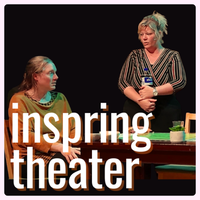
In forum theater, you take on the role of the main character on stage.
Oh—exciting! And unique (and efficient). Forum theater creates the opportunity to break open difficult themes and taboos. Making them open for discussion and practicing them yourself.
You only are in control of yourself
It is about our own behavior. In working with a specific target group or in challenging circumstances. Or perhaps we are the 'target group' ourselves. What do I need, how do I stand up for myself? Why is it difficult? What do I want?
Growth through sharing
We share our doubts and questions, successes and what we do know. The audience's self-confidence grows. People find words for vulnerable themes and dare to express themselves more easily. Everyone's self-confidence and self-efficacy grow. Vulnerable and powerful at the same time.

PLAYBACK THEATER

In playback theatre, we turn things around. We hear the audience first. The stories, the anecdotes from everyday reality. Beautiful and less beautiful. And we turn that into theatre.
Heart of the story
Every story has its own 'heart of the story'. The undercurrent, the essence.
That which it was all about. Sometimes impossible to capture in words. But certainly in images and music. Humorous, lighthearted, and poignant. Every story returns to the storyteller. Like a gift, wrapped in a personal mini-performance.
We hear everyone. Fully.
Everyone in the audience recognizes themselves in every story. They experience the same things, every day. Or it provides insight into another life. A new perspective, from a different angle. People feel seen, appreciated. Understood. And that connects.